
Direct answer
The production principle.
To keep the same AI character across scenes, treat identity as a fixed reference system rather than a paragraph of adjectives. Approve a clean face reference, record immutable facial and body traits, prove the identity in simple angles, and keep only recognizable outputs as a small reference set. Change location, wardrobe, camera, and mood around that identity one controlled variable at a time.
The guidance below is based on AI Craft Academy’s original synthetic creator study. Character behavior varies by model, reference quality, pose, crop, and scene complexity.
First-hand character proof
One original creator, several content roles.
The creator identity was carried through café lifestyle, street photography, bathroom UGC, product integration, close phone framing, and a 15-second performance while preserving the recognizable facial structure, freckles, hair, and age cues.
Inspect the complete case studyIndependent AI-generated production study using an original synthetic character.Identity consistency is a hierarchy
Face shape, feature spacing, hair, skin tone, age cues, and body proportions matter more than wardrobe or background. Put those immutable traits first, then describe the scene transformation.
A reliable generation order
Start with neutral, readable references and prove the identity in simple scenes before pushing into extreme editorial lighting or fantasy styling.
- Choose a sharp front or three-quarter portrait with natural texture.
- State the identity preservation instruction before scene language.
- Generate controlled variations and keep only recognizable results.
- Use approved outputs as additional references for difficult angles.
- For video, animate the strongest still instead of regenerating identity from text.
Common failure patterns
Overloaded prompts often preserve the costume while losing the face. Heavy beauty language can also smooth away the specific imperfections that make a person recognizable. Reduce style pressure before adding more identity adjectives.
Visual production proof
Reference, approved output, campaign family.
Show the recognizable identity traits that must survive later scene changes.
Original synthetic character; not a real customer or testimonial.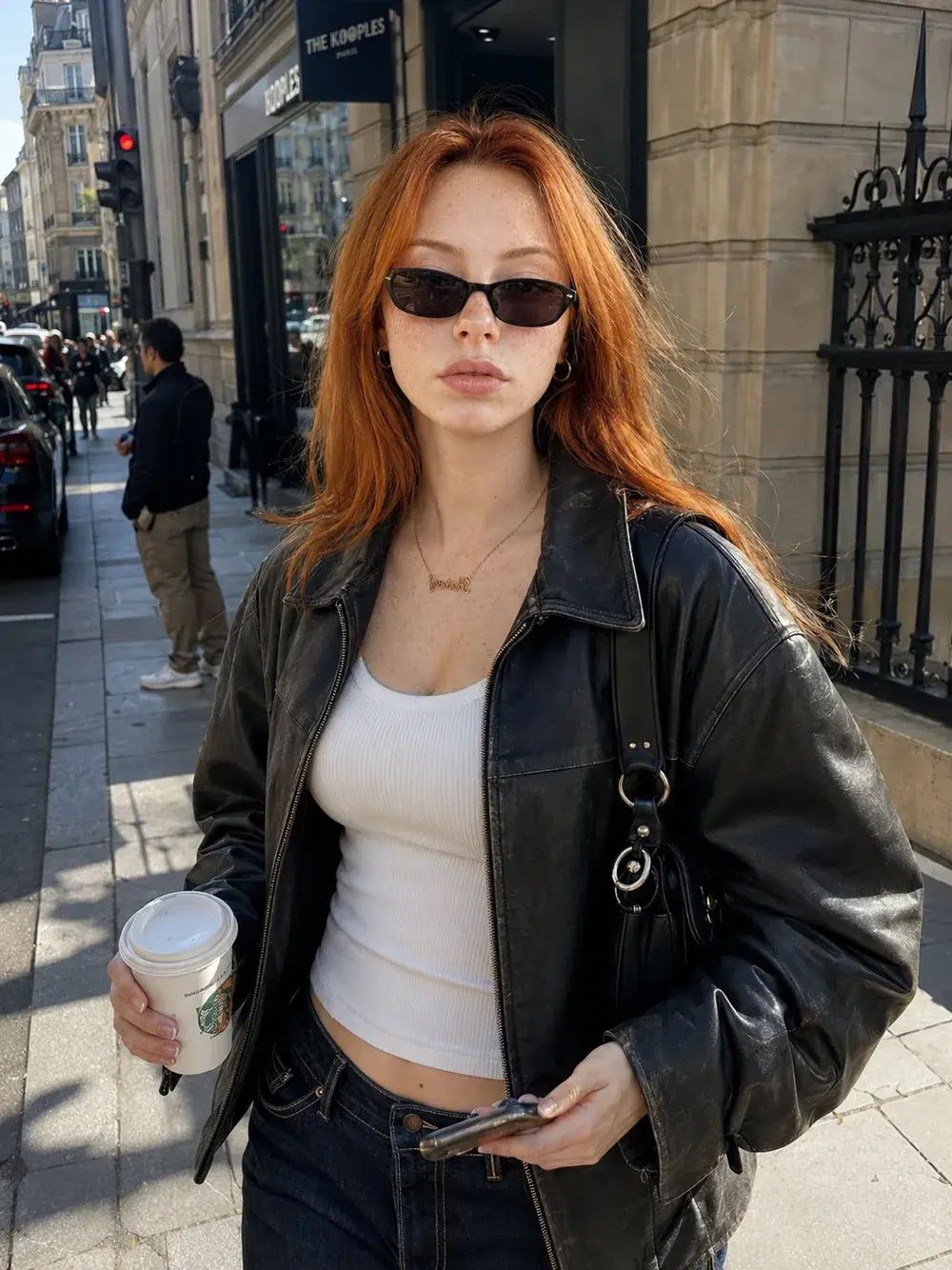
Make identity continuity visible across a change in environment and framing.
Original synthetic character; not a real customer or testimonial.
Show that character consistency is useful across content roles, not only portraits.
Original synthetic character; no customer or performance claim.Build a compact identity reference set
Start with a sharp front or three-quarter portrait where the eyes, nose, mouth, jaw, hairline, skin texture, and age cues are readable. Avoid extreme beauty retouching, heavy shadows, lenses that distort the face, and hands covering major features. One strong reference is more useful than several contradictory ones.
After the first successful variations, keep a restrained set that adds useful angle coverage without changing the person. Label which image is the primary identity reference and which images are supporting angle references.
Change one pressure source at a time
Wardrobe, location, expression, camera distance, lens, lighting, and pose all place pressure on identity. When several change together, it becomes difficult to diagnose why the face drifted. Prove the person in a neutral scene, then increase scene complexity in deliberate steps.
Do not reward a beautiful output that is no longer the same person. Recognition is the quality gate; styling comes after it.
Hand the approved identity to video
Choose the still that already satisfies the scene, framing, expression, hands, and product interaction. The motion prompt should direct behavior and continuity rather than redescribe the person. For deeper motion control, continue with the image-to-video guide after the character reference set is stable.
Diagnostic table
Find the failed layer before regenerating.
| Visible signal | Likely cause | Controlled correction |
|---|---|---|
| The outfit survives but the face changes | Styling language has more prompt pressure than identity | Reduce styling and restate the approved reference as fixed |
| Close-ups work but wide shots fail | The reference set lacks body and angle coverage | Approve a supporting medium frame before complex wide scenes |
| Two characters swap features | Roles and spatial positions are not separated | Define each identity, wardrobe, and frame position independently |
| Video smooths or redesigns the face | The first frame is weak or the motion request is overloaded | Use the strongest still and simplify movement |
Production checklist
Approve the system, not only the best frame.
- The primary portrait is sharp, naturally lit, and free from major occlusion.
- Immutable traits are described before scene styling.
- The identity has been proven in simple front, three-quarter, and medium views.
- Supporting references depict the same person without contradictory styling.
- Only one major scene variable is changed during difficult tests.
- Recognition is reviewed before beauty, mood, or production value.
Frequently asked
Questions this workflow should answer.
Why does an AI character’s face change between images?
The model is balancing identity against pose, crop, lighting, wardrobe, scene complexity, and style. Weak or contradictory references and overloaded prompts give the model more opportunities to reinterpret the person.
How many reference images are needed for character consistency?
There is no universal number. Begin with one strong primary portrait, then add only approved supporting angles that provide new information without contradicting the identity.
Should the same prompt be reused for every scene?
Reuse the identity lock, not the entire prompt. Scene, wardrobe, camera, action, and lighting should remain controlled variables around the fixed identity.

Written from production practice
Omer Faruk Sahin
Founder, CEO, and Creative Director at AI Craft Academy. Omer leads strategy, product, advertising, creative direction, and the production systems documented in these field guides.
Founder profileContinue building
Learn the complete production workflow.
The Academy connects prompt structure to references, first frames, motion, editing, distribution, and monetization.
Explore the Academy