
Direct answer
The production principle.
AI UGC intended to feel creator-native needs controlled behavior, not only a vertical crop on a polished commercial. Use a credible creator identity, a location that fits the product, spoken language, short performance beats, restrained gestures, readable product handling, and phone-native framing. Give each beat one communication goal and one visible action so the model and editor are not solving conflicting instructions.
The production example is an original synthetic creator spec study, not a performance claim. No conversion, reach, or platform-preference result is implied.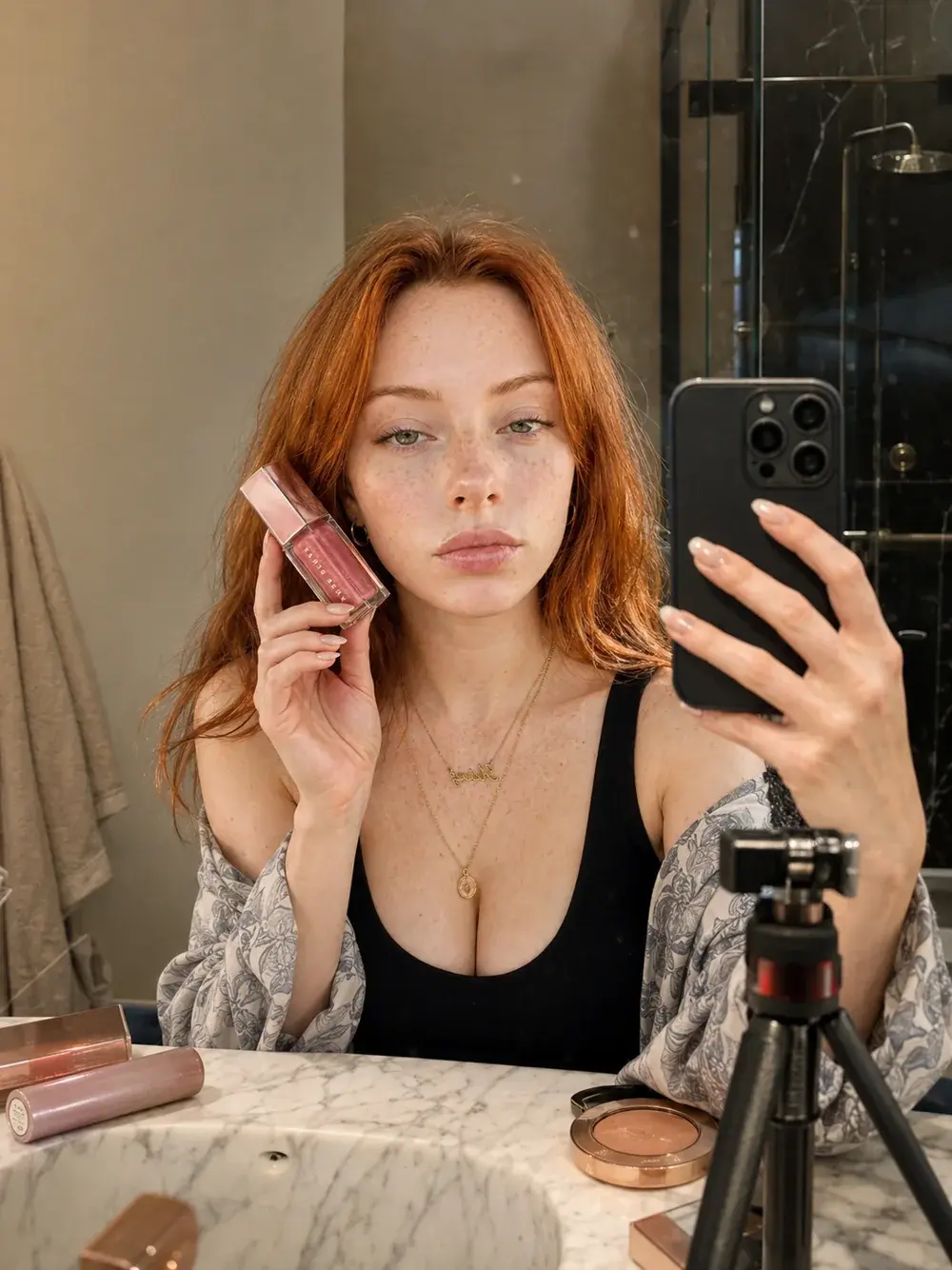
First-hand UGC proof
A 15-second performance built from identity, product, and behavior locks.
The original creator, product reference, bathroom setting, eye line, pauses, framing, and restrained handling were directed as separate constraints before the Seedance 2.0 performance was selected and edited.
Inspect the complete case studyIndependent synthetic-creator production study; no paid-media performance claim is attached.Native presentation is not permission to deceive
A vertical frame and a domestic setting do not automatically create UGC. The creator needs natural pauses, imperfect framing, small glances, restrained product interaction, and dialogue that sounds spoken rather than approved by a marketing committee.
Platform-native presentation is a production choice. It is separate from disclosure, which should be handled according to the approved campaign and platform requirements. It never permits a synthetic creator to pose as a real customer, imply an unverified experience, or make up testimonial-style proof.
Build a short, controllable ad sequence
Short beats are easier to control than dense paragraphs. Give each beat one communication goal and one visible action so the viewer can follow the idea and the production team can diagnose a weak take.
- Hook: a specific doubt, problem, or observation that the intended audience can recognize.
- Problem or objection: why that moment matters in the creator's day.
- Product demonstration: a stable, readable introduction with minimal handling.
- Believable proof: an approved fact, visible feature, or plain explanation without a fabricated transformation.
- CTA: a natural, approved next step in the same speaking voice.
Make phone-native decisions before generation
Decide how the clip should be held, paced, and read on a phone before asking a model to perform it. A usable reference gives the generation one clear visual job instead of asking it to imitate every social-video convention at once.
- Choose a camera height, framing distance, eyeline, and aspect ratio that match the intended placement.
- Use handheld movement, jump cuts, room tone, and captions only when they support the message rather than disguise a weak scene.
- Keep the product interaction simple enough to inspect: hold, point, open, place, or demonstrate one readable action.
- Give the spoken line and the visible action separate review points so pacing and lip sync can be checked independently.
Collect the source inputs before choosing a creator direction
The fastest way to create unusable UGC is to generate from an incomplete brief. Record the approved product evidence and public constraints before choosing the creator, scene, or hook variations.
- Product references and the exact visual details that must remain accurate.
- Approved factual claims, required disclosures, and restricted language.
- Brand restrictions, creator identity references, and any likeness or rights boundary.
- Demonstration requirements, platform destination, ratio, and the next action the creative should earn.
Use a variation matrix, then reject weak takes
Vary one production axis at a time so feedback stays useful. A matrix is more reliable than asking for endless different versions because it keeps the approved product and claim boundary stable while testing what actually changed.
- Hold fixed: the approved product, factual claim, disclosure requirement, platform, and final CTA.
- Vary intentionally: hook, angle, creator direction, product demonstration, or CTA phrasing.
- Reject: identity drift, product inaccuracy, unusable hand interaction, implausible demonstration, unsupported claim, deceptive presentation, or mismatched voice and lip sync.
- Keep only selected directions that remain readable at the final crop and make their review status explicit before handoff.
Use AI UGC as a controlled testing layer
AI UGC can explore hooks, creator directions, and shot logic before a brand commits to a larger production. The strongest concepts can remain clearly disclosed synthetic assets or become better briefs for real creators, depending on the campaign, platform, rights, and approval requirements.
Visual production proof
Reference, approved output, campaign family.
Explain why a usable first frame precedes performance generation.
Synthetic creator production study; not a testimonial.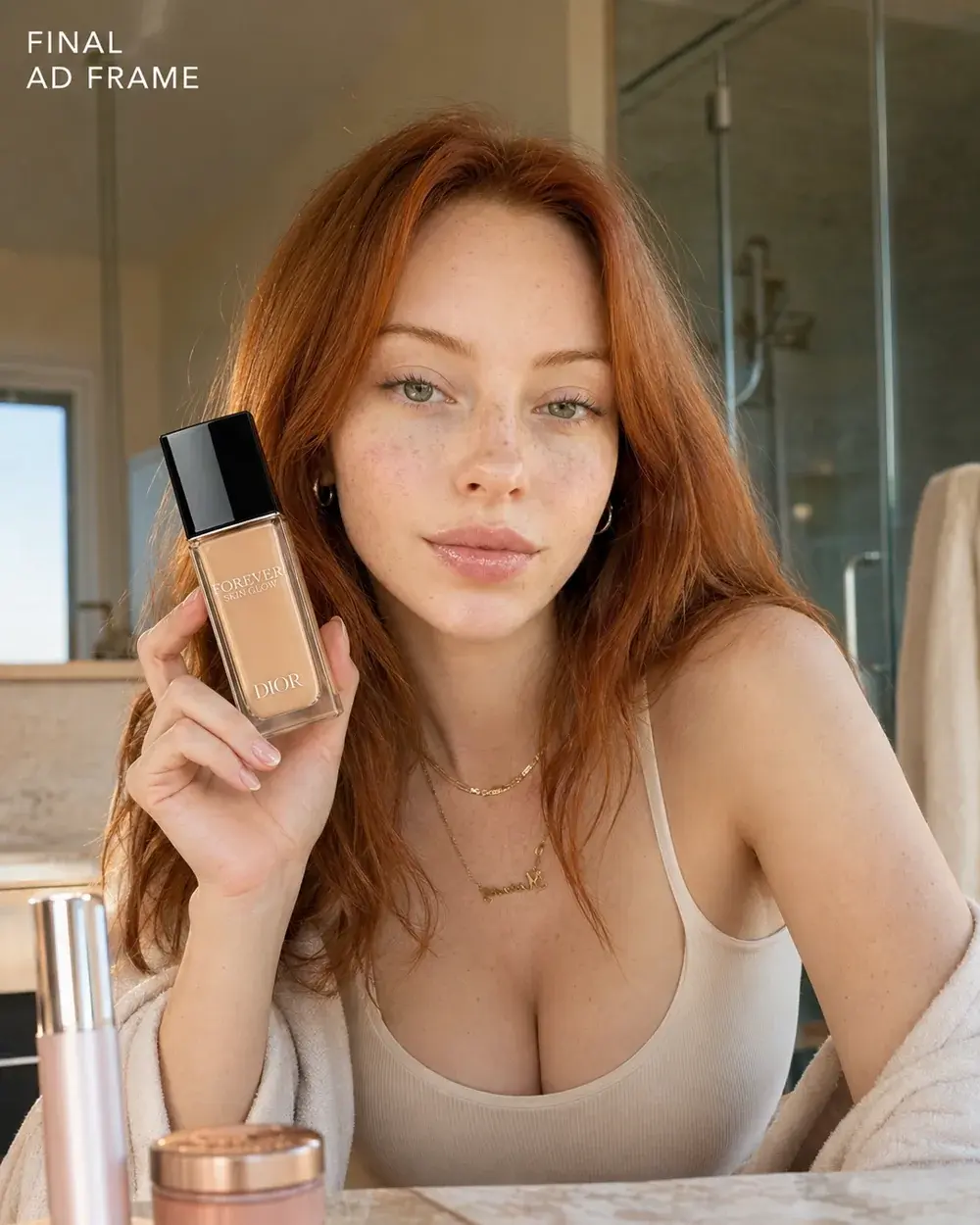
Show the relationship between restrained action and a reviewable result.
Synthetic creator production study; no campaign-performance claim.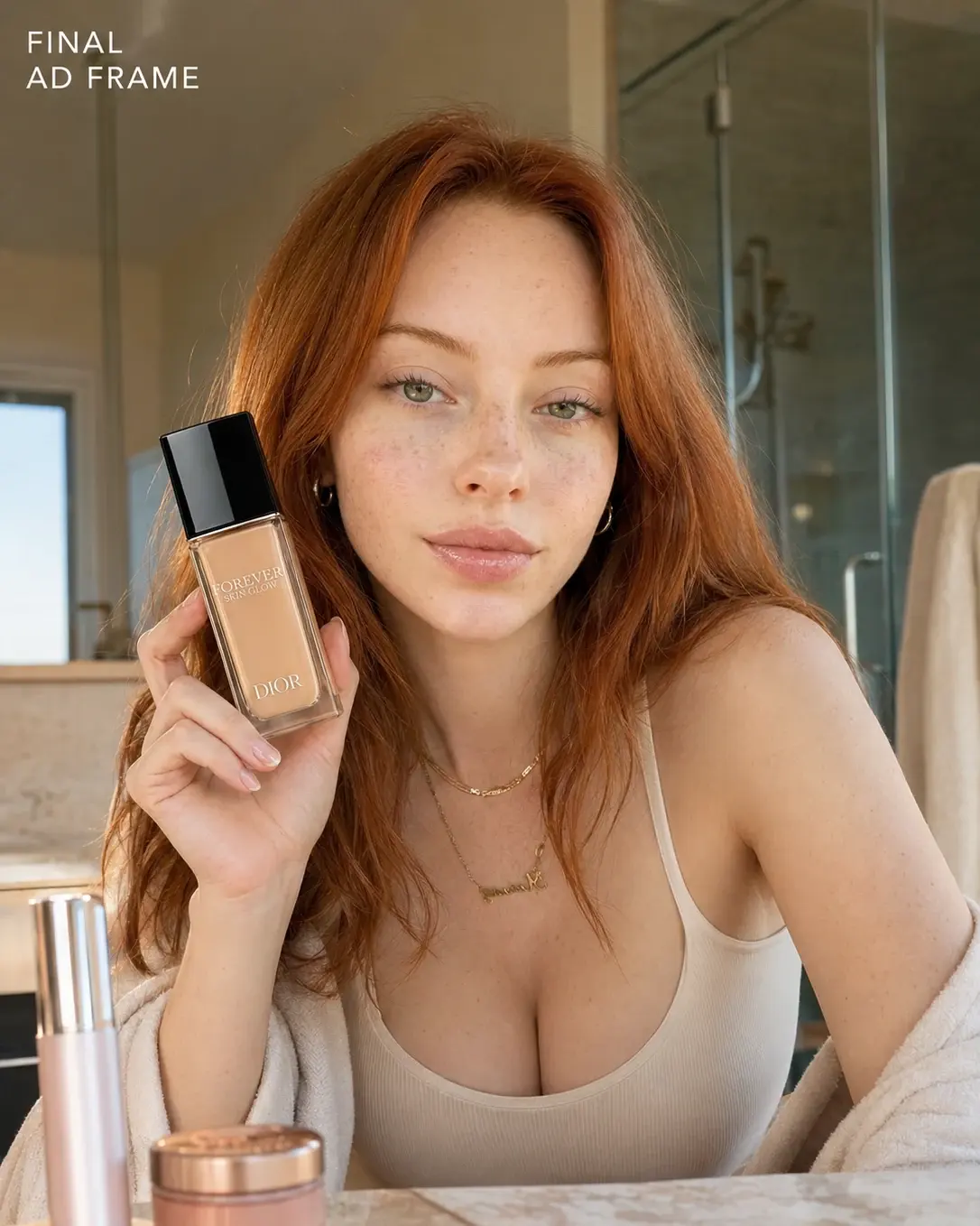
Explain the inputs behind a creator-native UGC asset.
Educational workflow proof; not a client result.Cast a creator who belongs in the situation
Casting is a credibility decision. Define the creator’s relationship to the problem, the room they would realistically record in, wardrobe that fits that context, and a delivery style the audience would recognize. Avoid building a generic attractive spokesperson and adding a product afterward.
Preserve the approved identity across the first frame, product interaction, and final performance. If identity is unstable in stills, it will be harder to protect during speech and motion.
Separate dialogue from performance direction
Write dialogue that can be spoken in one breath. Place eye line, pauses, product lift, glance, and expression in a separate direction block. One action per beat is easier to generate and easier to cut than dense choreography.
Phone-native does not mean careless. Keep the product readable, hands plausible, claims restrained, and the next step clear while preserving small framing and timing imperfections that suit the creator context.
Treat disclosure and claims as production requirements
Before publishing, review the rules that apply to the platform, market, product category, likeness, voice, music, and commercial claim. Do not imply a real customer testimonial when the creator is synthetic. Do not invent results or transformations that the brand cannot support.
Diagnostic table
Find the failed layer before regenerating.
| Visible signal | Likely cause | Controlled correction |
|---|---|---|
| The clip looks like a commercial actor | Dialogue and gestures are over-rehearsed | Shorten the line and reduce performance to one natural action |
| The product changes during handling | The action is too complex or the product reference is weak | Use a stable hold, readable angle, and fewer hand transitions |
| The creator feels disconnected from the offer | Casting, room, wardrobe, and problem do not share a context | Define the creator’s relationship to the use case before scripting |
| The result feels fake despite good image quality | Timing, eye line, pauses, or spoken language are too polished | Direct behavioral imperfections instead of adding visual noise |
Production checklist
Approve the system, not only the best frame.
- The creator identity and reason to discuss the product are credible.
- Dialogue sounds natural when read aloud without performance.
- Every beat has one message and one controllable visible action.
- The product remains accurate, readable, and physically integrated.
- Framing, eye line, pauses, and room logic feel native to the platform context.
- Publication is held until claims, synthetic-media disclosure, likeness, voice, music, trademarks, and platform requirements are assessed.
Frequently asked
Questions this workflow should answer.
What makes AI UGC feel realistic?
Credible casting, spoken language, contextual locations, restrained gestures, natural pauses, stable product handling, and phone-native framing matter more than simply using a vertical aspect ratio.
Should AI UGC imitate a real customer testimonial?
Do not present a synthetic creator as a real customer or invent personal results. The script and disclosure should accurately represent what the asset is and what the brand can support.
Why do AI UGC product shots break?
Complex hand choreography, small labels, weak product references, long uninterrupted actions, and overloaded prompts increase the chance of drift. Simplify the action and start from a stronger approved frame.

Written from production practice
Omer Faruk Sahin
Founder, CEO, and Creative Director at AI Craft Academy. Omer leads strategy, product, advertising, creative direction, and the production systems documented in these field guides.
Founder profileContinue building
Learn the complete production workflow.
The Academy connects prompt structure to references, first frames, motion, editing, distribution, and monetization.
Explore the Academy