
Character systems · UGC
AI Character Consistency Examples
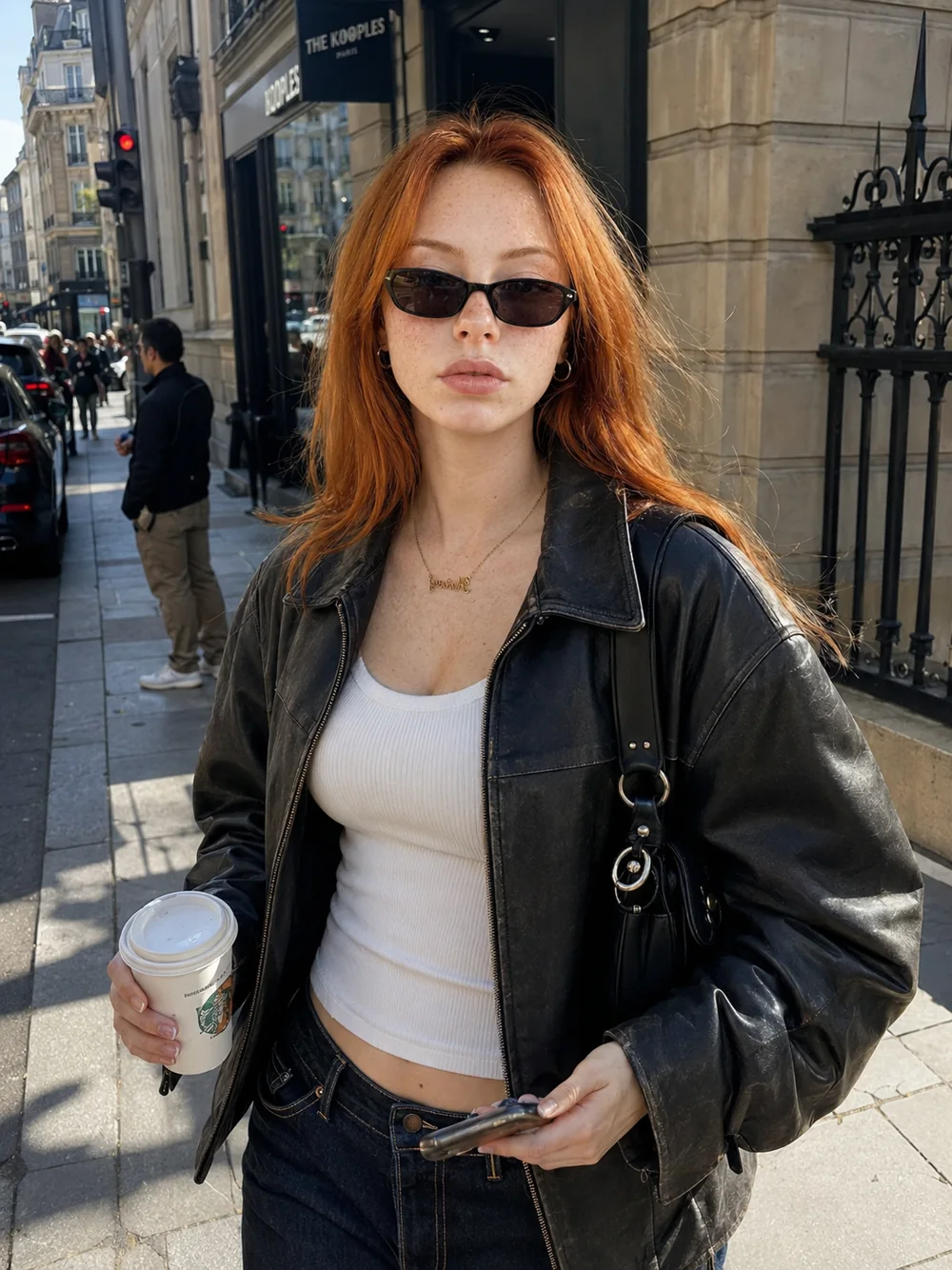
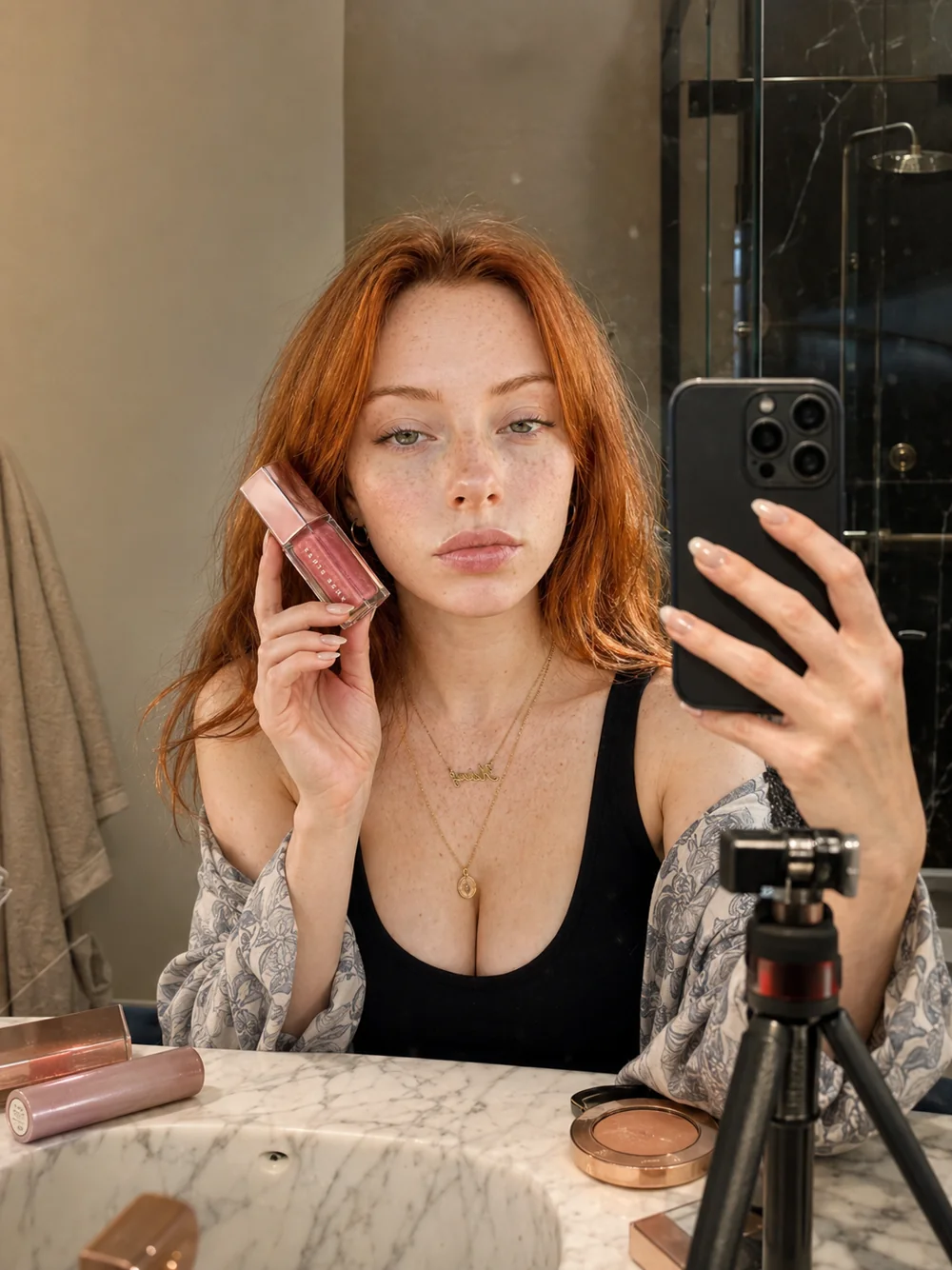
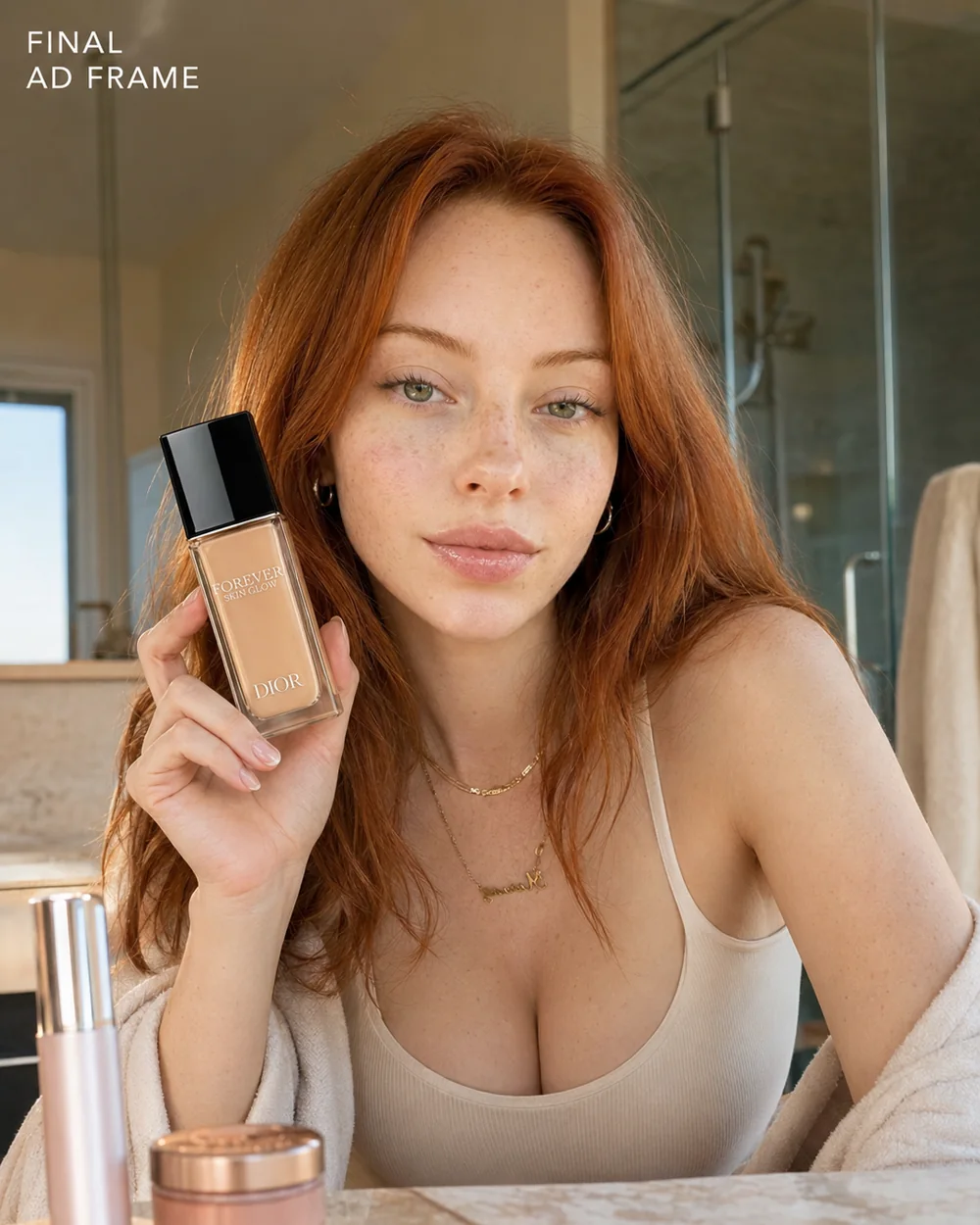
AI character consistency means preserving recognizable identity anchors while changing scene, wardrobe, camera distance, expression, and content role. Good examples should show the same original identity across meaningfully different conditions and disclose that the person is synthetic.
The person shown is an original synthetic character used in an AI Craft Academy internal production study. The examples are not client work, a real customer testimonial, or an official brand partnership.
What this demonstrates
Read the system behind the output.
- One synthetic identity across editorial and phone-native contexts
- Face, hair, skin texture, and age anchors held while scene roles change
- Product interaction introduced without resetting creator identity
Input and reference method: The process starts with an approved synthetic identity reference that documents facial structure, freckles, hair color, age range, and realistic camera treatment. New scenes change one production variable at a time.
Production workflow
Build approvals before variations.
The example is organized around fixed inputs, controlled changes, and manual review gates.
Approve the identity anchor
Select a clear reference with stable face geometry, hair, skin texture, age, and styling boundaries.
Build scene families
Separate lifestyle, street, product, and UGC roles instead of forcing every context into one prompt.
Control variable changes
Change location, wardrobe, framing, or action deliberately while keeping identity instructions fixed.
Compare as a set
Review facial proportions, freckles, hairline, age, and native camera feel across all selected frames.
Decision trail
Why the selected set advanced.
The trail records production decisions without exposing private references or full prompts.
- 01Decision gate
Approve an original synthetic identity with stable facial geometry, age, hair, and skin markers.
- 02Decision gate
Build separate lifestyle, street, product, and UGC scene families around that identity.
- 03Decision gate
Compare candidate frames as a set before selecting for realism or composition.
- 04Decision gate
Reject any frame that could be mistaken for a different person or an undisclosed testimonial.
Annotated proof set
Different roles.
Shared anchors.
Every image is a repo-owned proof asset shown with its production role and the disclosure above.

Consistency notes
What stays fixed.
- Facial structure, freckles, red hair, age, and skin texture are the primary anchors.
- Lifestyle frames use different locations without changing the person into a new identity.
- UGC frames preserve the creator while introducing a product and closer phone-camera composition.
QA checklist
What must pass review.
- Face geometry, eye spacing, hairline, freckles, and apparent age
- Hands and product interaction in close UGC compositions
- Wardrobe and scene changes that remain plausible for the same creator
- Synthetic-person disclosure and absence of testimonial language
Rejected output examples
Why attractive work can still fail.
Age and face drift
A scene retained hair color but changed apparent age, eye spacing, and facial proportions.
Decision: Reject as a new identity rather than treating it as a minor styling variation.Unusable product interaction
A close UGC composition introduced hand and product-contact defects around the focal area.
Decision: Reject or rebuild the interaction before copy, polish, or motion is added.Lost phone-native treatment
A frame became a polished campaign portrait instead of a plausible creator-style capture.
Decision: Move it outside the UGC family and regenerate for the intended camera role.Safe limitations
What this does not prove.
- The synthetic character is not evidence of a customer experience or endorsement.
- Identity consistency can drift under extreme angle, motion, or wardrobe changes.
- Commercial use still requires product, likeness, disclosure, and platform review.
Connected production paths
Move from proof to method, service, or learning path.
Every destination below is a published, sitemap-backed route connected to this production job.
Questions
How to evaluate this proof.
01Is the person in these examples real?
No. The identity is an original synthetic character created for an internal AI Craft Academy production study.
02What should stay fixed across scenes?
Facial proportions, age, hair, skin markers, and the approved realism treatment should remain stable while scene and content-role variables change deliberately.