
Direct answer
The production principle.
AI product photography works when the referenced product is treated as the fixed object and the campaign world is built around it. Lock silhouette, proportions, label hierarchy, logo position, closure, material, and color before describing surfaces, props, lighting, lens, or mood. Judge every result first on product accuracy, physical contact, readable branding, and commercial usability—not on atmosphere alone.
This workflow is demonstrated through an independent eyewear spec campaign. It does not imply a commissioned relationship with any third-party brand.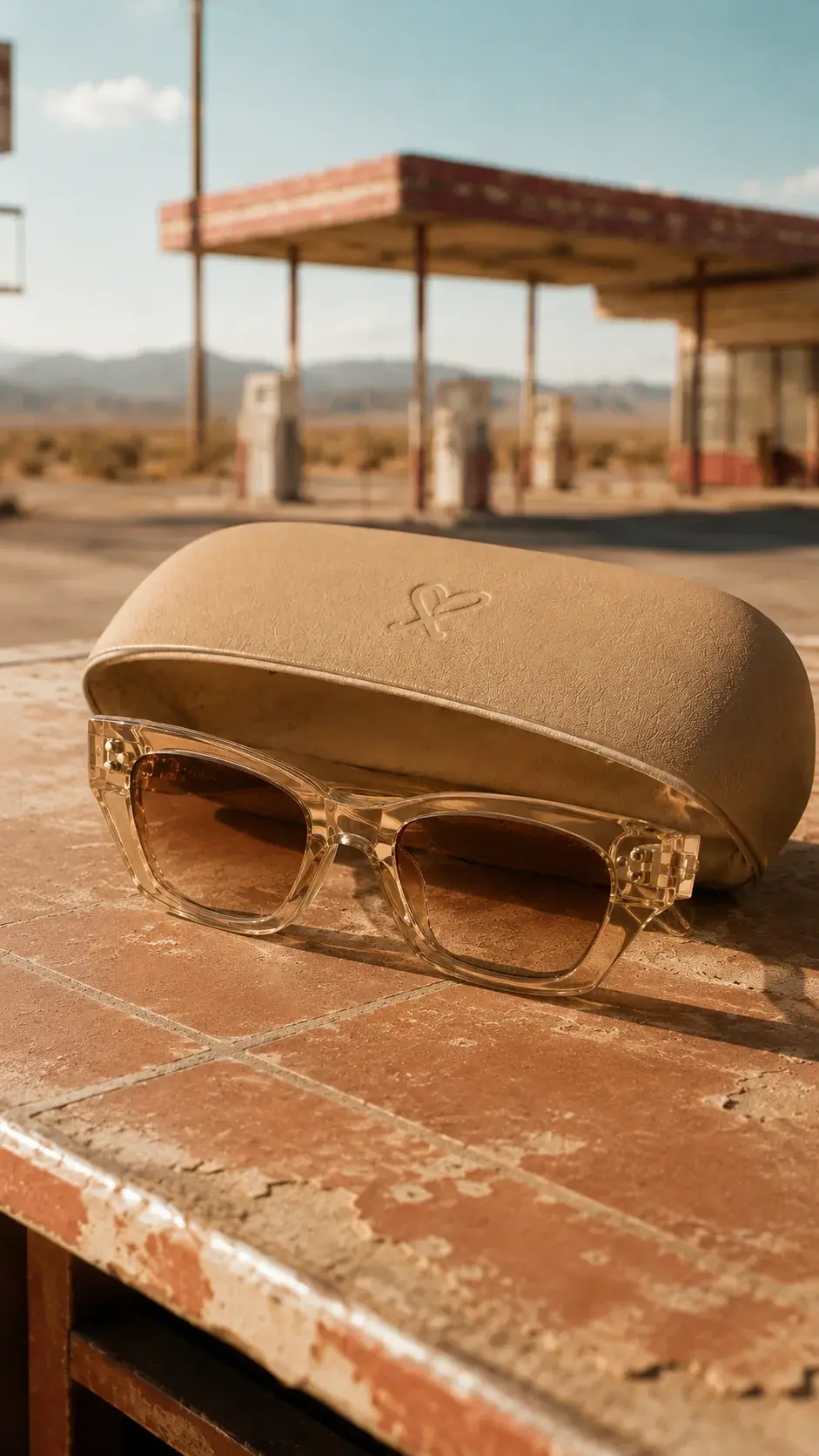
First-hand campaign proof
One eyewear product expanded into a connected desert campaign.
The translucent frame, case, warm desert location, casting logic, vehicle, palette, and texture were held together across product hero, talent, lifestyle, UGC, ambassador, and motion assets.
Inspect the complete case studyIndependent AI Craft Academy spec concept; not a commissioned client campaign. Any third-party marks are unofficial visual references, and no affiliation or endorsement is implied.The product is the fixed object
The label, logo placement, cap, silhouette, color, material finish, and proportions are non-negotiable. A beautiful scene is a failure if the model quietly redesigns the product.
Build the environment in layers
Commercial realism comes from the relationship between product, surface, light, and lens. Props should support the product story rather than compete with it.
- Surface: stone, metal, fabric, water, glass, or a believable pedestal.
- Contact: weight, cast shadow, reflection, splash interaction, and scale.
- Lighting: key direction, rim light, practical sources, and highlight control.
- Camera: focal length, depth of field, framing, and copy-safe negative space.
Turn one concept into a campaign
Keep the visual thesis stable while changing shot distance, prop intensity, and composition. A hero image, macro detail, lifestyle frame, and vertical social asset should feel related without being duplicates.
Reference to campaign
Do not multiply the image until the product is right.
A production-safe sequence separates product truth from creative direction, then uses review to decide when variation is earned.
- 01Reference
Clean product views establish geometry, label placement, material, and color.
- 02Lock
Write the details that cannot change and qualify the source images.
- 03First output
Build one hero scene with believable contact, light, and scale.
- 04Review
Reject label drift, changed proportions, weak shadows, or invented materials.
- 05Correction
Change one failed variable while keeping the approved product and world fixed.
- 06Variation
Expand the approved master into lifestyle, social, and campaign roles.
Source qualification
Decide whether the product evidence is ready before generating.
A reference is sufficient only for the facts and views it can prove. Hold the shot when a commercially important surface, material, scale cue, or claim would have to be invented.
| Source responsibility | Evidence required | What may vary | Hold or reject when |
|---|---|---|---|
| Front identity and label | A sharp, straight-on image of the current package with every required word and mark readable. | Background, crop, camera distance, and lighting once the front identity is locked. | The label is blurred, clipped, obsolete, or conflicts with supplied artwork. |
| Shape, sides, and closure | Front, side, back, top, and detail views for every surface the planned shot must reveal. | Viewing angle only within geometry already supported by an approved view. | The brief asks the model to invent an unseen side, cap, opening, attachment, or construction detail. |
| Material and color | Neutral-light photographs plus the approved color and finish specification for the exact variant. | Environmental reflections and light intensity without changing opacity, texture, or product color. | White balance, glare, compression, or mixed variants make the real finish uncertain. |
| Scale and physical contact | Known dimensions and an approved in-hand, in-use, or support-surface reference when interaction matters. | Pose and surrounding props while the product keeps believable weight, contact, and proportion. | No source establishes size or the requested interaction depends on hidden geometry. |
| Claims and variant facts | The current SKU, mandatory copy, approved claims, included parts, and forbidden alterations. | Campaign language and layout around those facts, subject to human approval. | Source versions disagree or a requested statement cannot be verified by the brand owner. |
| Destination and crop | The asset role, final ratios, safe areas, required copy space, and marketplace or channel restrictions. | Composition across approved formats when the product remains complete and legible. | The only usable source is clipped where a required crop must show the full product. |
Last reviewed 2026-08-01. This board qualifies source evidence; it does not certify product facts, rights, channel compliance, or final output accuracy. A human owner must approve each.
Visual production proof
Reference, approved output, campaign family.
Show the product source-of-truth before campaign expansion.
Independent spec concept; not commissioned client work.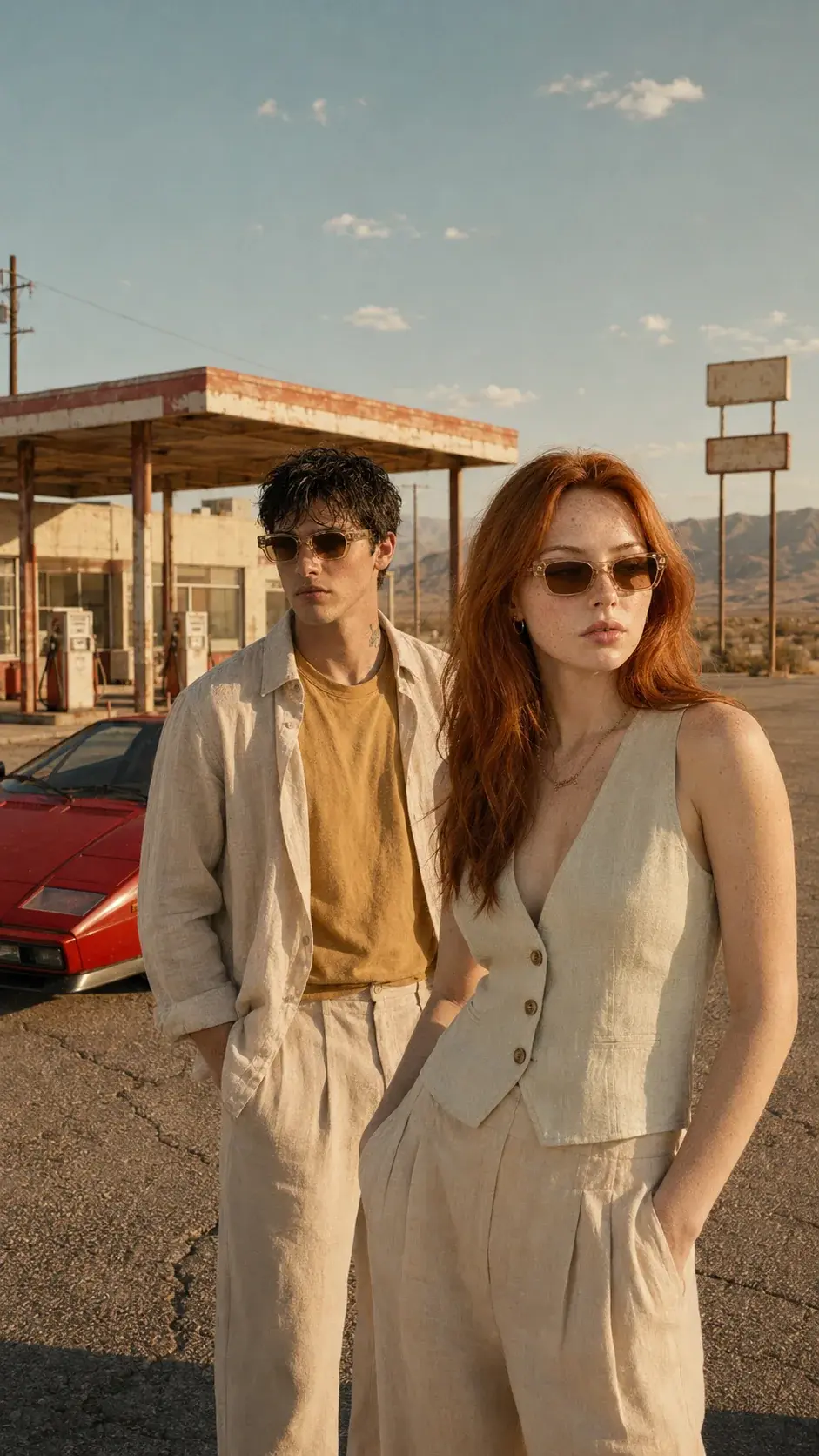
Explain how one product lock supports a distinct campaign role.
Independent spec concept; not commissioned client work.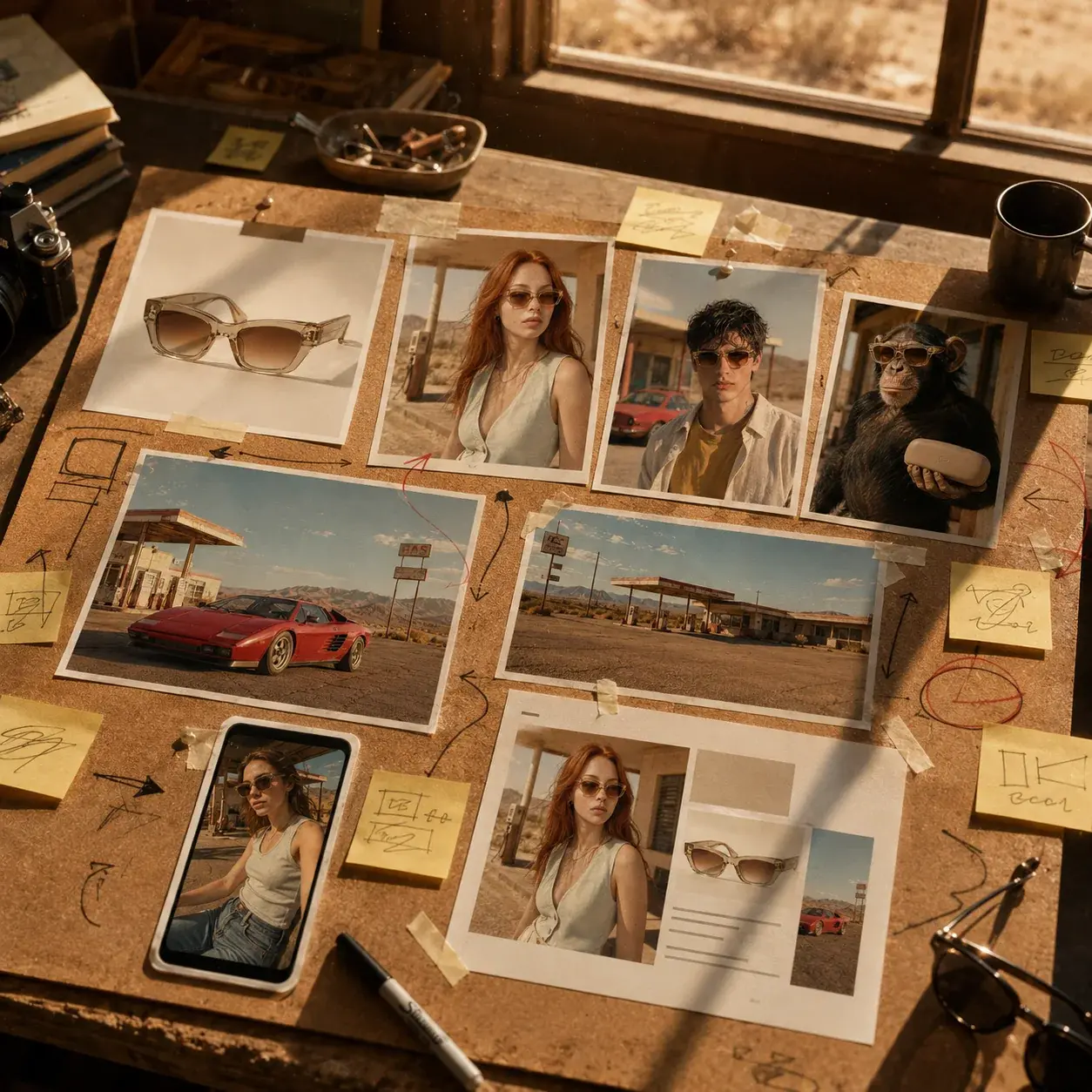
Demonstrate campaign-scale continuity rather than an isolated image.
Independent spec concept; not commissioned client work.Write the product inspection block before the art direction
Inspect the source as if it were going into a retouching brief. Record the outer silhouette, dimensions, cap or hinge construction, transparent and reflective materials, label layout, logo location, typography hierarchy, color relationships, and distinctive details. These are fixed facts, not mood language.
Use a clean packshot or several complete product views when the object has important details on multiple sides. Do not ask a single front view to prove geometry it does not show.
Validate the object before approving the scene
Zoom in on label text, logo shape, closure, edge geometry, reflections, and scale. Then inspect contact: the product should cast a plausible shadow, respond to the same light as the environment, and sit on rather than float above the surface.
If the campaign world is strong but the package drifts, preserve the composition and issue a narrow repair. Rebuilding the entire image can destroy the successful lighting and layout without guaranteeing a better product.
Expand by shot family, not random variation
Define a hero frame, macro detail, alternate angle, talent interaction, vertical social crop, and motion source frame. Keep the campaign thesis stable while changing shot distance and content role. The result should feel like one production with useful format coverage, not six unrelated prompt demonstrations.
Diagnostic table
Find the failed layer before regenerating.
| Visible signal | Likely cause | Controlled correction |
|---|---|---|
| The scene is premium but the product is wrong | Art direction was written before the product lock | Move verified product facts to the first prompt block |
| The product appears to float | Contact shadow, reflection, or scale is inconsistent | Specify the surface relationship and matching light direction |
| Logos or labels mutate between shots | Each angle is being regenerated from text alone | Use the clean product reference and repair branding locally |
| Assets do not feel like one campaign | Palette, light, location, and prop rules change together | Keep one campaign lock and vary only shot role |
Production checklist
Approve the system, not only the best frame.
- The product references show every commercially important side.
- Silhouette, proportion, material, color, logo, and label hierarchy are recorded.
- The product remains readable at the intended final crop.
- Shadow, reflection, perspective, and scale match the environment.
- Hero, detail, talent, social, and motion frames share one campaign thesis.
- Final assets are reviewed against the original product, not against each other.
Frequently asked
Questions this workflow should answer.
How do you keep a product accurate in AI images?
Use clean complete references, describe immutable product facts before the scene, compare every generation with the original, and repair drifted labels or geometry without unnecessarily rebuilding the approved composition.
Why does AI change product labels and logos?
Small typography, unfamiliar marks, perspective changes, reflections, and low-resolution references are difficult constraints. Accuracy requires explicit references, readable angles, close inspection, and often a narrow correction pass.
Can one product photo create a full campaign?
It can support a campaign concept when the visible geometry is sufficient. Products with important side, rear, transparent, or mechanical details benefit from additional complete views.

Written from production practice
Omer Faruk Sahin
Founder, CEO, and Creative Director at AI Craft Academy. Omer leads strategy, product, advertising, creative direction, and the production systems documented in these field guides.
Founder profileContinue building
Learn the complete production workflow.
The Academy connects prompt structure to references, first frames, motion, editing, distribution, and monetization.
Explore the Academy