
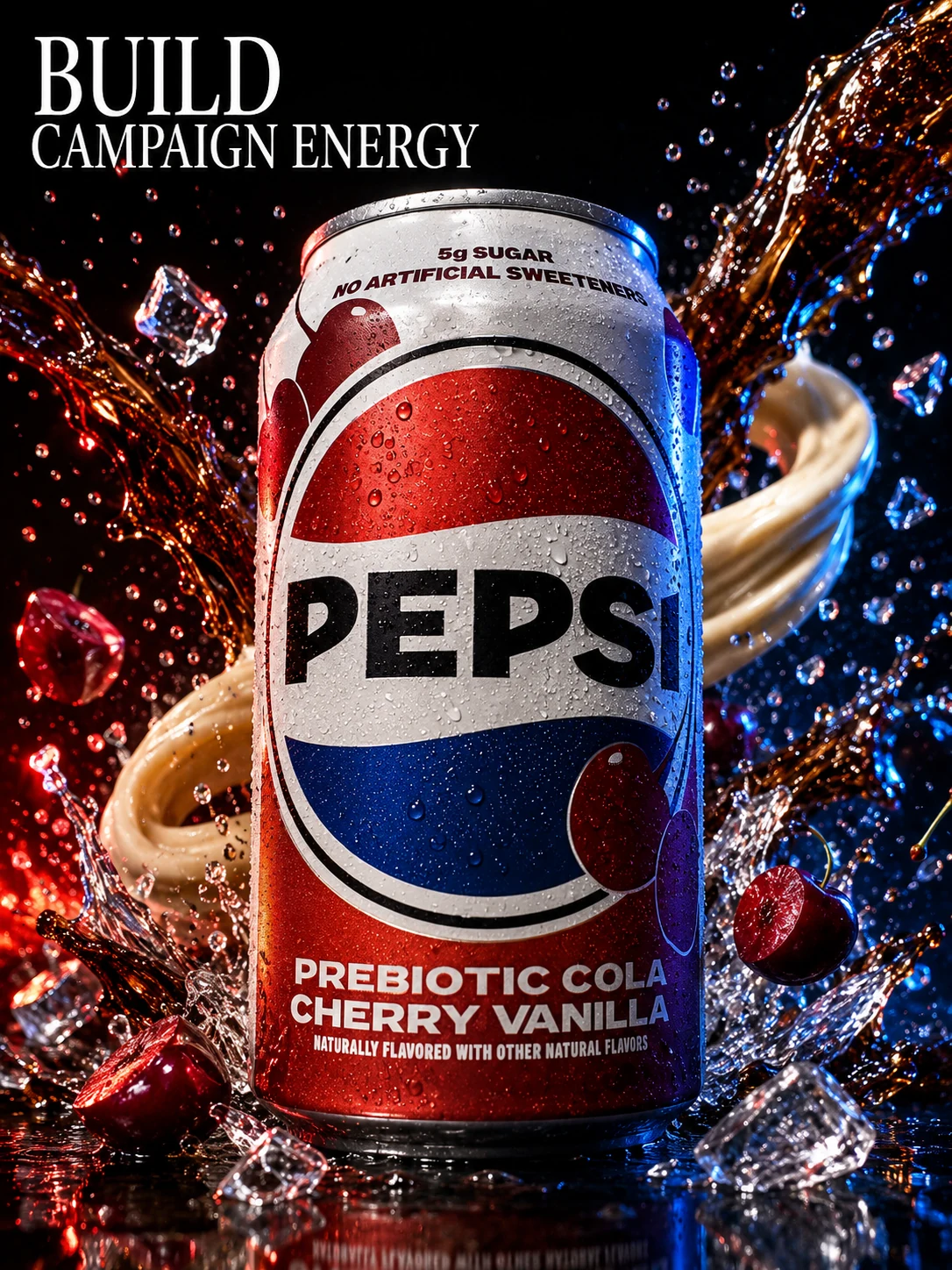
Fictional planning example
Fictional asset-role comparison
One unbranded product is examined as hero, detail, ritual, creator, and copy-safe compositions with different acceptance checks.
This example is fictional and demonstrates planning structure only. It is not a client campaign, testimonial, or performance result.Step-by-step workflow
AI product photography examples: the working sequence.
- Identify the product fact each example protects.
- Name the placement and composition role.
- Inspect surface contact, scale, label, and material.
- Compare examples as a connected asset family.
- Choose the method closest to the real brief.
Quality framework
Acceptance checks for AI product photography examples.
- Disclosure is visible.
- Product identity is the fixed anchor.
- Each example has a distinct role.
- No performance claim is attached.
- The related workflow is available.
Example deliverables
Outputs from Fictional asset-role comparison.
- Hero example
- Material detail
- Lifestyle context
- Copy-safe placement
Common mistakes
Failure modes specific to AI product photography examples.
- Treating a render as campaign performance proof
- Comparing examples without source constraints
- Ignoring final placement
- Assuming one frame can fill every role
Cluster pathway
Choose the next useful step.
Questions
Questions before applying AI product photography examples.
01What inputs should be ready for AI product photography examples?
Prepare the product type, target placements, fixed packaging details, preferred campaign direction, and the examples that correspond to the deliverables you actually need.
02What uncertainty remains after applying AI product photography examples?
It helps evaluate example types before choosing a product production lane. It cannot guarantee output quality, commercial performance, or a business result because references, tools, execution, distribution, and review remain variable.
03Should AI product photography examples be learned internally or scoped with the Studio?
Learn the method through the Academy when the goal is internal capability. Use the Studio when a brand needs the same production decision applied to approved inputs and bounded deliverables.