
Product visuals · Campaign systems
AI Product Campaign Examples
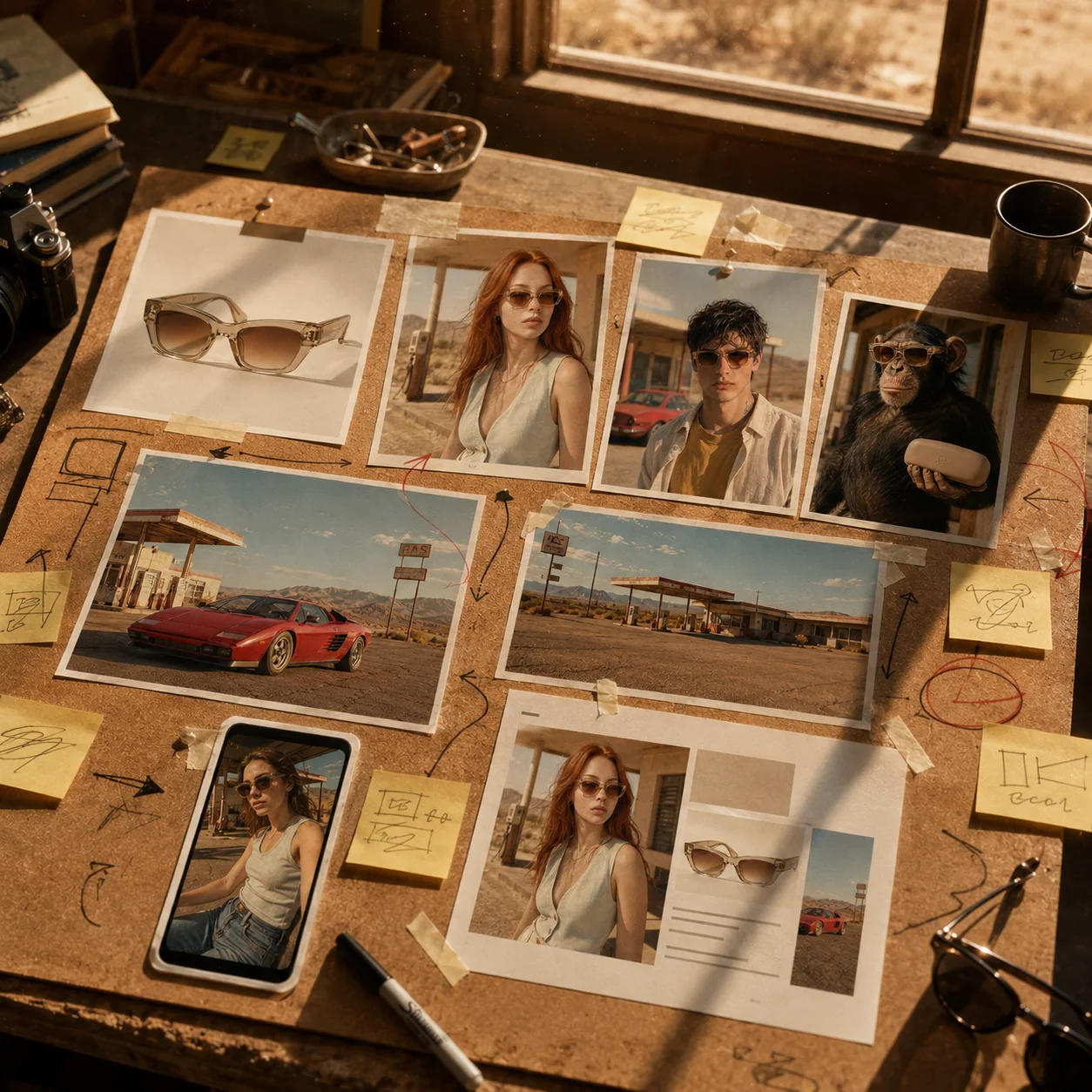
Strong AI product campaign examples show a connected asset system, not isolated renders. The product identity, environment, casting direction, color logic, and format roles should remain recognizable while each frame solves a different campaign job.
These images are an AI Craft Academy spec concept created as an internal production demonstration. They are not client work and do not represent an official brand partnership or campaign performance result.
What this demonstrates
Read the system behind the output.
- Product identity carried from a hero frame into lifestyle and creator compositions
- One campaign world adapted across product, talent, social, and motion-source roles
- A review process organized around continuity and deliverable purpose
Input and reference method: The study began with an approved fictional eyewear product, case, desert environment, casting direction, vehicle prop, palette, and vertical delivery plan. Those references became fixed anchors before the shot list expanded.
Production workflow
Build approvals before variations.
The example is organized around fixed inputs, controlled changes, and manual review gates.
Approve the product lock
Fix the product shape, transparent material, case, proportions, and hero presentation before changing the scene.
Lock the campaign world
Define the desert location, warm palette, wardrobe range, props, and lighting conditions as a reusable world.
Assign asset roles
Separate hero, talent, lifestyle, creator, and copy-safe frames so every output has a clear production job.
Review as one system
Compare product geometry, environment, casting, scale, and color across the full set before selecting outputs.
Decision trail
Why the selected set advanced.
The trail records production decisions without exposing private references or full prompts.
- 01Decision gate
Approve the fictional eyewear geometry and case before introducing talent or environment variation.
- 02Decision gate
Select the desert gas-station world because it supports product contrast and a connected lifestyle system.
- 03Decision gate
Keep only frames that preserve product identity while adding a distinct hero, talent, lifestyle, or social role.
- 04Decision gate
Reject attractive images that cannot sit beside the approved set without resetting scale, palette, or geography.
Annotated proof set
Different roles.
Shared anchors.
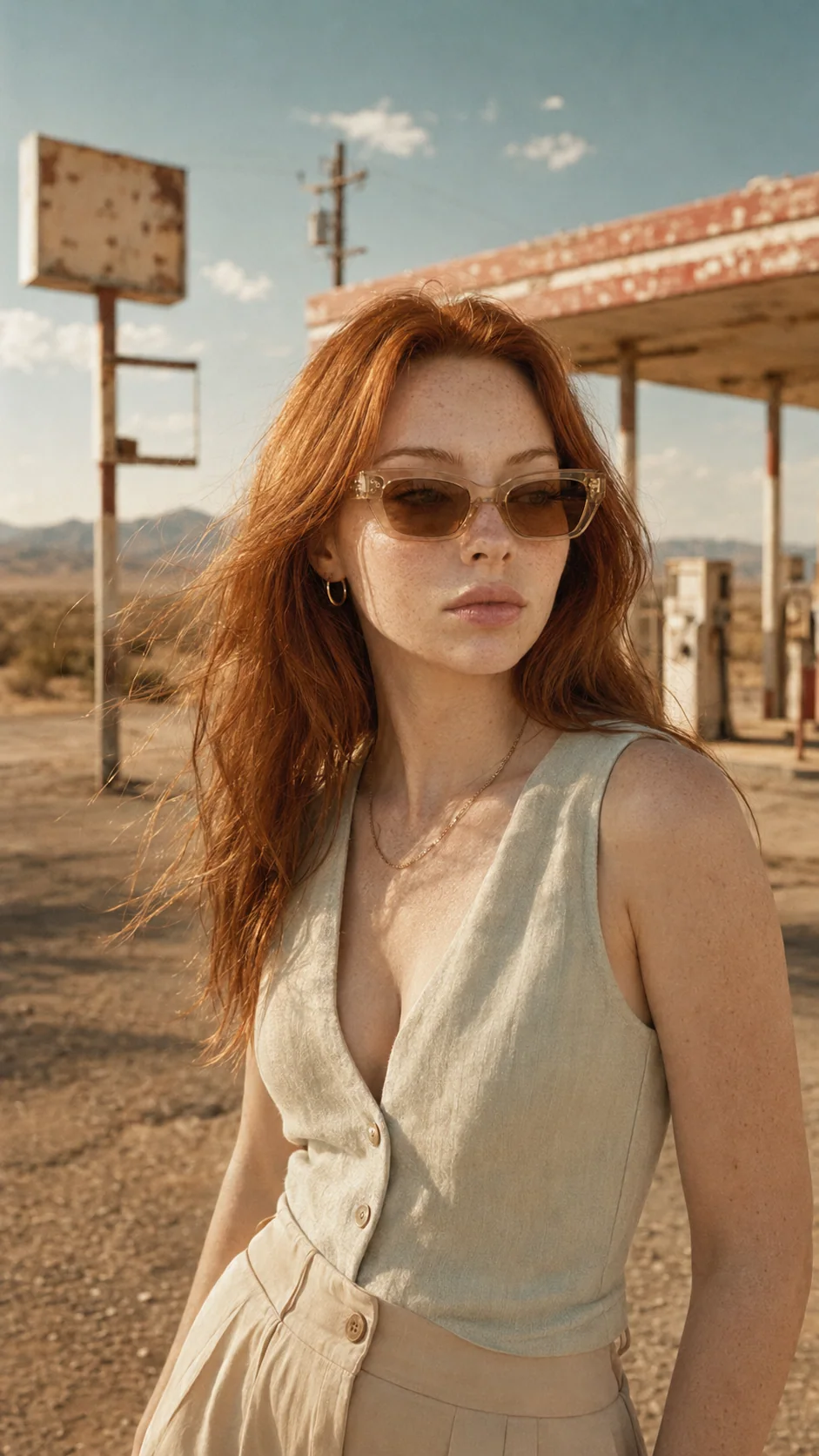
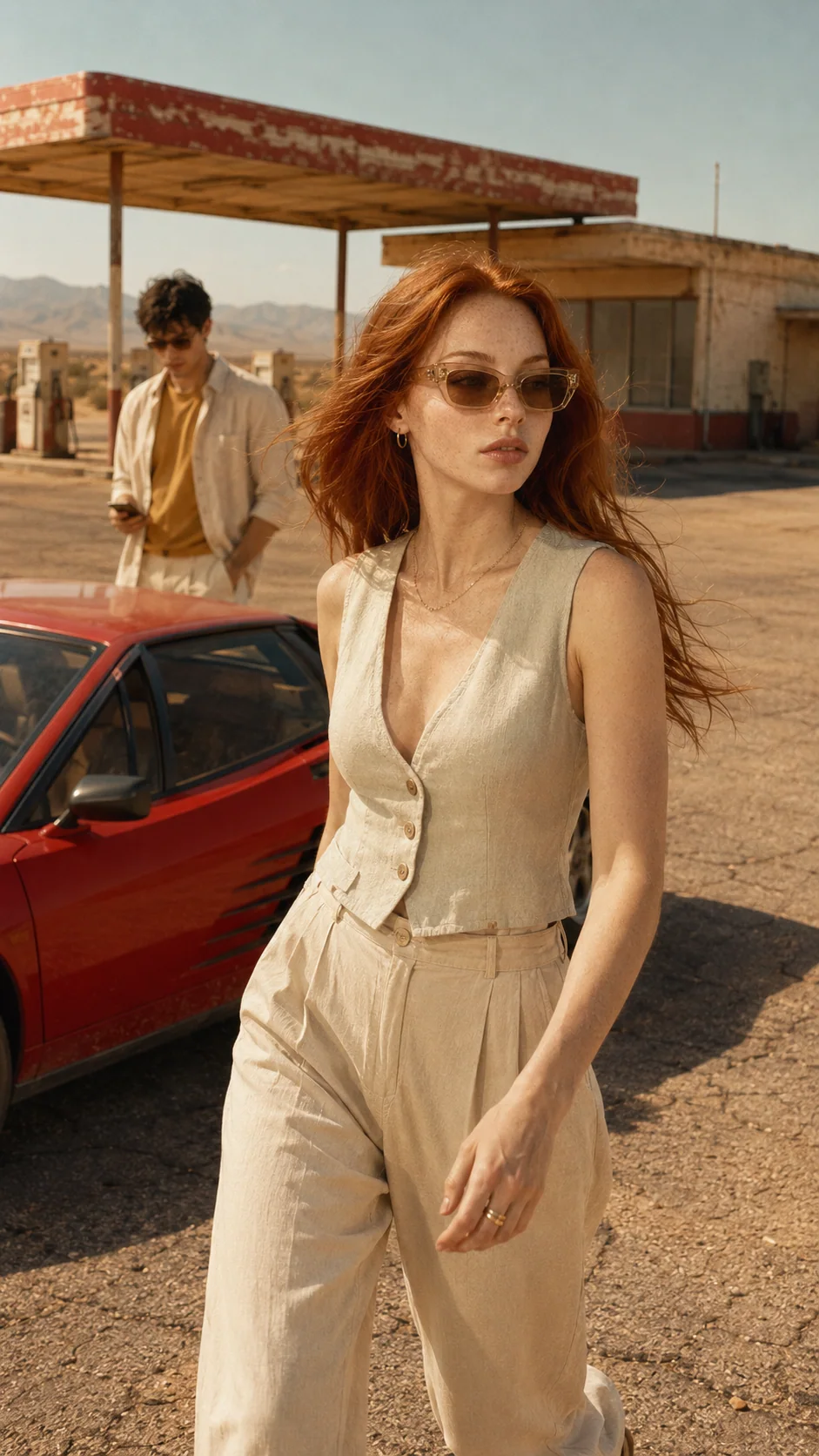
Every image is a repo-owned proof asset shown with its production role and the disclosure above.

Consistency notes
What stays fixed.
- The translucent eyewear and case are the fixed product anchors.
- The desert gas-station geography and warm wardrobe logic hold the campaign together.
- Each frame changes composition role without resetting the visual world.
QA checklist
What must pass review.
- Product shape, transparency, scale, and surface contact
- Face, wardrobe, and environment continuity across talent frames
- Readable focal hierarchy and usable crop space
- Disclosure and absence of unsupported performance claims
Rejected output examples
Why attractive work can still fail.
Lens and case drift
A variation changed the translucent frame proportions and made the case read as a different product.
Decision: Reject and regenerate from the approved product lock rather than repairing a changed identity.Disconnected campaign world
A polished lifestyle direction abandoned the desert location, warm palette, and established prop language.
Decision: Reject because visual quality alone did not preserve the campaign system.No useful crop space
The subject filled the frame without safe space for copy or alternate placements.
Decision: Keep it outside the delivery family and request a role-specific composition.Safe limitations
What this does not prove.
- The study does not demonstrate paid-media performance or customer response.
- Generated product details still require human review before commercial use.
- A real brand project would require authorized source assets and brand approvals.
Connected production paths
Move from proof to method, service, or learning path.
Every destination below is a published, sitemap-backed route connected to this production job.
Questions
How to evaluate this proof.
01Are these images from a client campaign?
No. They are an AI Craft Academy spec concept and internal production demonstration, disclosed so the process can be evaluated without implying a client relationship.
02What makes the examples a campaign system?
The product, environment, palette, casting direction, and quality checks remain connected while the compositions change to serve different asset roles.