
Direct definition
When should AI be used for supplement content?
Use it for controlled creative extensions around a verified product and approved facts. Do not use it to manufacture medical evidence, biological outcomes, before-and-after proof, or customer endorsement.
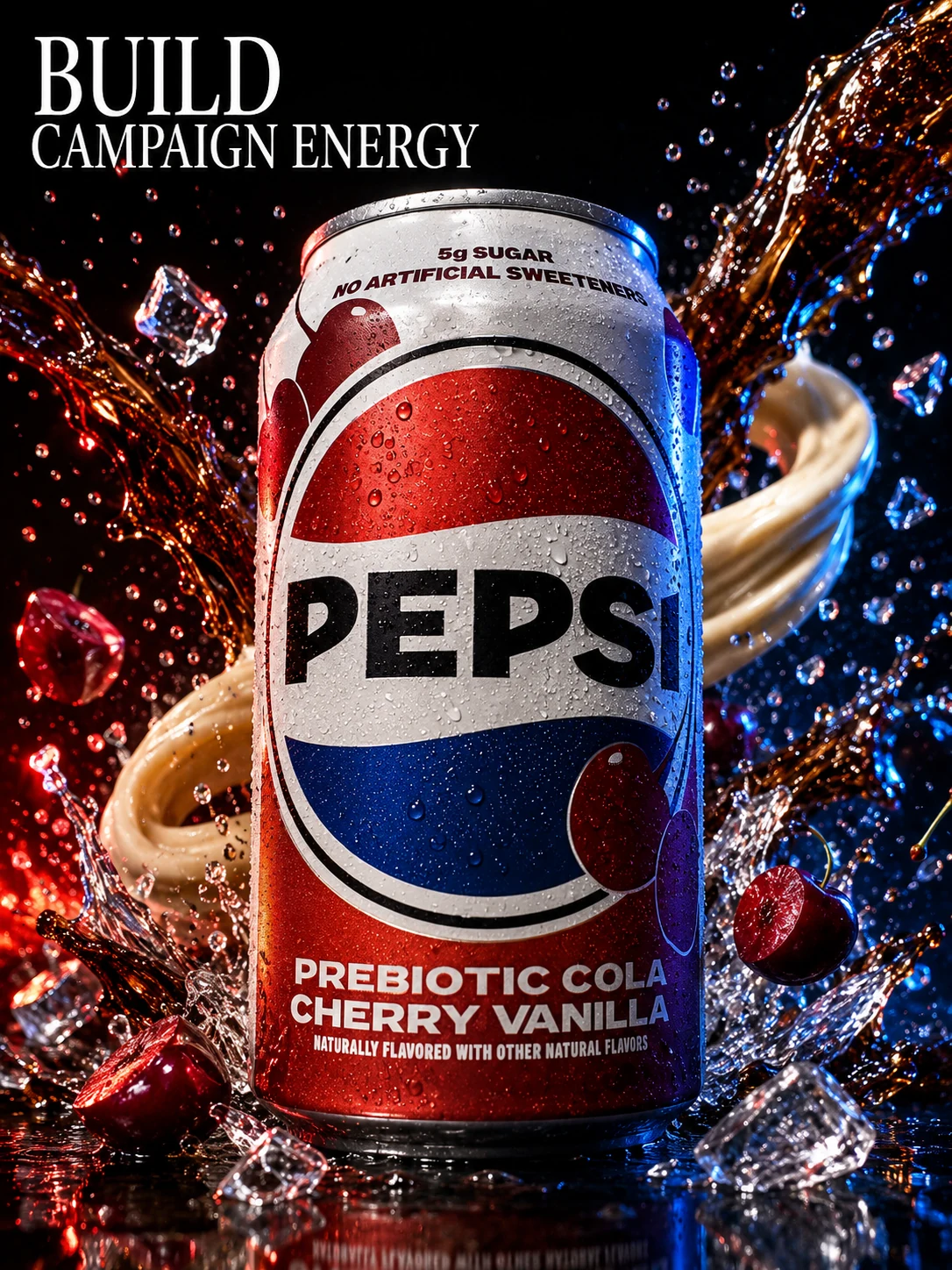
Fictional planning example
Fictional supplement asset menu
An unbranded daily capsule uses a hero, routine, creator hold, abstract ingredient texture, and educational layout without health outcomes.
This example is fictional and demonstrates planning structure only. It is not a client campaign, testimonial, or performance result.Claims control
Claims, Disclosure and Rejection Matrix
Use this production matrix before a supplement concept reaches design or generation. It separates product depiction from health-related claims and assigns escalation when the evidence, wording, label, or disclosure has not been approved.
Decision sequence
- Lock the current approved packaging and label source.
- Separate visual description from objective product claims.
- Match every claim to owner-supplied substantiation.
- Escalate disease, quantified-result, testimonial, and study references.
- Approve disclosure placement in the final format.
Ingredient presentation
An ingredient can be shown without inventing its origin, purity, mechanism, or effect.
- Evidence required
- Current label, ingredient specification, and approved factual description.
- AI boundary
- May create neutral ingredient-inspired texture; must not depict a biological mechanism or unverified source.
- Review or disclosure
- Product and claims reviewer confirms wording and visual implication.
- Reject or escalate
- Escalate implied efficacy, purity, sourcing, absorption, or clinical effect.
- Approved use
- Neutral product context or clearly abstract ingredient-supporting art.
Packaging and product form
Packaging facts remain fixed across every creative treatment.
- Evidence required
- Approved packshots, label artwork, product form, count, color, dimensions, and closure details.
- AI boundary
- May generate surroundings and lighting; must preserve required text, geometry, quantity, and product form.
- Review or disclosure
- Packaging owner compares the final asset with the approved product source.
- Reject or escalate
- Reject changed Supplement Facts, dosage text, ingredient text, warnings, count, capsule form, or brand marks.
- Approved use
- Pack hero, routine scene, creator hold, or retailer crop after factual QA.
General lifestyle context
A routine scene should not quietly become an outcome claim.
- Evidence required
- Approved audience, setting, product-use instructions, and campaign claim boundary.
- AI boundary
- May create a neutral routine or environment; must not visualize a health transformation.
- Review or disclosure
- Claims reviewer checks the net impression of image, copy, sequence, and CTA together.
- Reject or escalate
- Escalate scenes implying diagnosis, recovery, pain removal, weight change, or guaranteed wellbeing.
- Approved use
- Non-outcome routine context that matches approved use directions.
Structure/function wording
AI should not author or broaden regulated claim language.
- Evidence required
- Verbatim owner-approved wording and substantiation supplied by the responsible claims team.
- AI boundary
- May place approved text; must not paraphrase it into stronger, faster, broader, or disease-related language.
- Review or disclosure
- Qualified reviewer confirms the wording and any required disclaimer or labeling procedure.
- Reject or escalate
- Escalate any wording that implies diagnosis, treatment, cure, prevention, or an unsupported body-function effect.
- Approved use
- Only the exact approved wording in its reviewed placement.
Quantified result
A number requires traceable evidence and a qualified interpretation.
- Evidence required
- Owner-supplied study or analysis, method, population, duration, result, and approved qualification.
- AI boundary
- May format verified data; must not generate percentages, timescales, sample sizes, or comparisons.
- Review or disclosure
- Scientific, claims, and legal reviewers approve wording and presentation.
- Reject or escalate
- Reject invented clinical results, omitted limitations, distorted charts, or a generated visual presented as measured outcome.
- Approved use
- Qualified factual communication only after evidence and net-impression review.
Before-and-after implication
A transformation image functions as an outcome claim even without explicit copy.
- Evidence required
- Verified source records, authorization, conditions, timing, and approved representation.
- AI boundary
- Must not generate the before state, after state, body change, symptom change, or measured outcome.
- Review or disclosure
- Escalate for claims and legal review before any production use.
- Reject or escalate
- Reject synthetic transformations or visuals that imply typical, guaranteed, or measured results.
- Approved use
- No generated outcome use; proceed only with independently approved authentic evidence.
Testimonial-style claim
A synthetic creator cannot become a customer witness.
- Evidence required
- Verified customer experience, authorization, exact approved statement, and substantiation for conveyed product claims.
- AI boundary
- May create a disclosed fictional presenter for non-testimonial explanation; must not fabricate an experience or endorsement.
- Review or disclosure
- Claims and endorsement reviewer assesses identity, wording, disclosure, and represented outcome.
- Reject or escalate
- Reject fabricated customers, experiences, quotes, clinician roles, or results.
- Approved use
- Factual presenter-led explanation that is clearly not a customer testimonial.
Disease-treatment implication
Disease claims require immediate escalation outside routine creative production.
- Evidence required
- Qualified regulatory determination and approved product classification and claim.
- AI boundary
- Must not generate disease names, symptoms, treatment scenes, diagnostic imagery, or cure/prevention implications.
- Review or disclosure
- Escalate to qualified regulatory and legal reviewers.
- Reject or escalate
- Reject unsupported disease treatment, diagnosis, cure, mitigation, or prevention implications.
- Approved use
- None unless the responsible qualified reviewers explicitly authorize the specific communication.
Scientific or clinical evidence reference
A study citation cannot be created from a prompt.
- Evidence required
- Complete owner-supplied source, study identity, relevance assessment, limitations, and approved claim connection.
- AI boundary
- May format an approved citation; must not invent research, journals, institutions, experts, findings, or study graphics.
- Review or disclosure
- Scientific and claims reviewers verify the source and the communication it supports.
- Reject or escalate
- Reject unverifiable references, generated citations, cherry-picked outcomes, or visuals that overstate evidence.
- Approved use
- Reviewed citation and accurately bounded summary supplied by the evidence owner.
Disclosure placement
A disclosure must survive the actual asset, crop, duration, and placement.
- Evidence required
- Approved disclosure text and placement requirements for the channel and claim.
- AI boundary
- May reserve layout space; must not rewrite, hide, truncate, or visually subordinate required disclosure.
- Review or disclosure
- Reviewer checks the final exported format, not only the design file.
- Reject or escalate
- Reject unreadable, fleeting, cropped, separated, or contradicted disclosure.
- Approved use
- Final-format placement that remains clear in the intended context.
Step-by-step workflow
AI supplement content use cases: the working sequence.
- List approved facts and prohibited claims.
- Choose a content role with suitable risk.
- Lock packaging and label requirements.
- Create and disclose the visual context.
- Complete compliance and platform review.
Quality framework
Acceptance checks for AI supplement content use cases.
- The role does not imply efficacy.
- Packaging facts are checked.
- Claims have an approved source.
- Creator status is disclosed.
- Compliance review is recorded.
Example deliverables
Outputs from Fictional supplement asset menu.
- Role selection
- Claims boundary
- Five concept frames
- Review record
Common mistakes
Failure modes specific to AI supplement content use cases.
- Using before-and-after framing
- Treating ingredients as efficacy proof
- Generating dosage text
- Publishing before compliance review
Cluster pathway
Choose the next useful step.
Questions
Questions before applying AI supplement content use cases.
01What must be prepared before applying AI supplement content use cases?
Prepare verified packaging, approved and prohibited claims, required disclaimers, retailer or platform specifications, brand references, and the compliance owner.
02When is AI supplement content use cases the right use case page?
Use it when the immediate job is to choose supplement content roles that fit the available evidence and compliance boundaries. It is intentionally narrower than a general industry use cases guide and does not replace rights, claims, or subject-matter review.
03What should teams avoid promising when they use AI supplement content use cases?
Do not turn AI supplement content use cases into a guarantee of output quality, delivery success, media performance, revenue, or another business result. The framework organizes production decisions; references, tools, execution, distribution, and approval still determine what is usable.